
Healthy Meals on a Budget: Making the Most of Pantry Staples
A nourishing meal does not have to begin with a detailed plan or a long shopping list. A few shelf-stable staples, some fresh produce, and a willingness to adjust as you go can become satisfying meals that fit your household. At North County Community Food Bank, we believe healthy food access includes practical ideas that help people use what they have with confidence.
Every food box and kitchen is different, so think of the suggestions below as mix-and-match starting points rather than rules. Whether you are cooking for one person, a busy family, or neighbors sharing a meal, small choices can help ingredients go further and make mealtime feel more manageable.
Think in Simple Building Blocks
When you look through your pantry, refrigerator, or food assistance items, try grouping ingredients into a few flexible building blocks: a grain or starch, a protein, vegetables or fruit, and a flavorful finishing touch. You do not need every category at every meal, and there is no single “right” combination. The goal is simply to create meals that feel filling, colorful, and enjoyable with what is available.
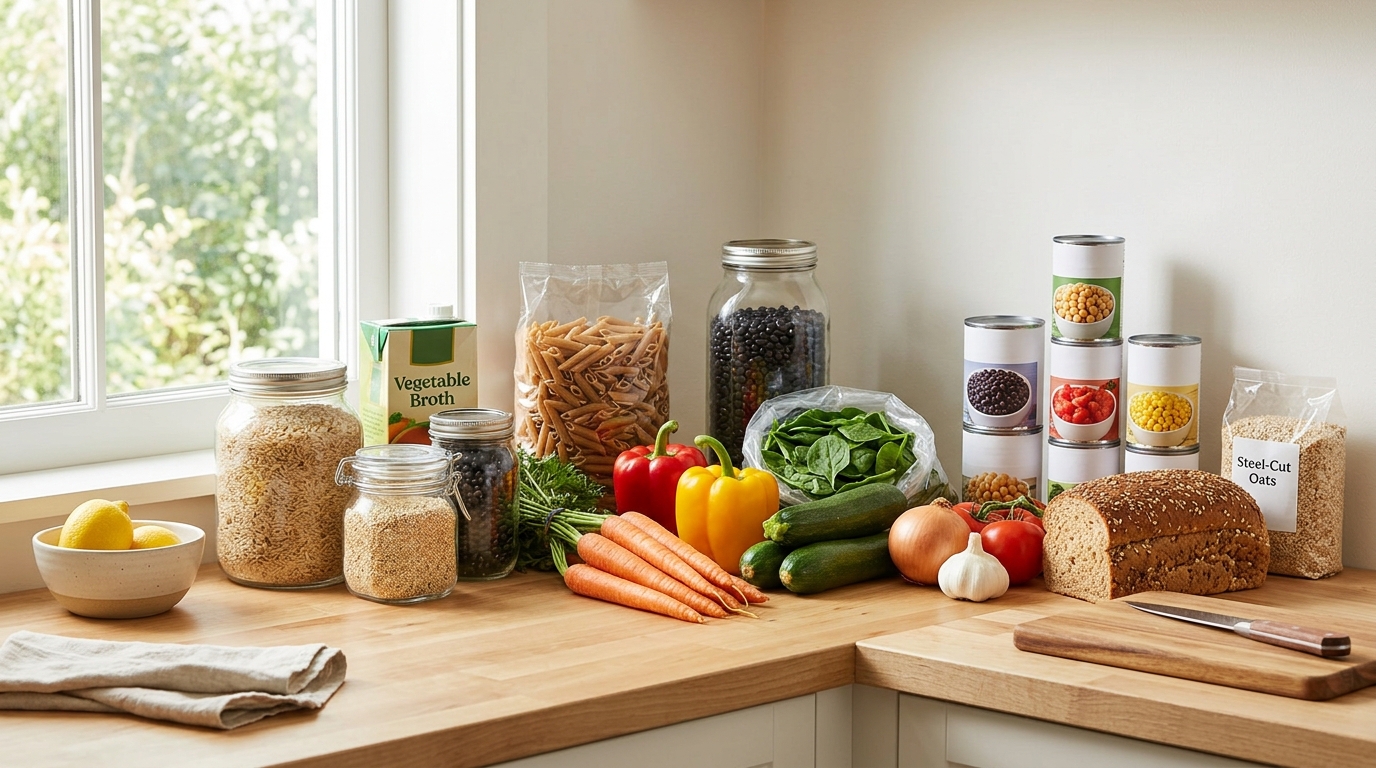
For example, rice, pasta, potatoes, oats, tortillas, or canned corn can provide a base. Beans, lentils, canned fish, eggs, peanut butter, cheese, or leftover meat can add substance. Fresh produce, frozen vegetables, canned tomatoes, or fruit can bring color and variety. A small amount of broth, salsa, herbs, spices, oil, or a favorite sauce can tie everything together.
This approach is especially useful when a food box includes a changing mix of shelf-stable groceries, fresh produce, and USDA commodities. Instead of searching for a recipe that requires exact ingredients, start with what you have and choose a cooking method that works for your kitchen.
Turn Everyday Groceries Into Flexible Meals
Many familiar foods can move easily from one kind of meal to another. Canned beans, for instance, can be added to soup, folded into a rice bowl, mashed for a sandwich filling, or combined with chopped vegetables and a simple dressing for a quick salad. Pasta can become a warm dish with sautéed produce and canned tomatoes, or a chilled leftover salad with beans and crisp vegetables.
Try these adaptable meal ideas:
- Soup or skillet meal: Combine broth or canned tomatoes with beans, lentils, pasta, rice, or potatoes. Add sturdy vegetables first and more delicate greens near the end.
- Grain bowl: Start with cooked rice, oats, quinoa, or another grain. Top it with beans, vegetables, a fried or scrambled egg, and a sauce or seasoning you enjoy.
- Loaded baked potato: Fill a baked potato with beans, canned chili, cheese, cooked vegetables, salsa, or leftover protein.
- Breakfast-for-dinner: Pair eggs, oatmeal, toast, or pancakes with fruit, vegetables, yogurt, peanut butter, or leftover roasted vegetables.
- Wrap, sandwich, or quesadilla: Use tortillas or bread to bring together beans, cheese, vegetables, fruit, or leftover cooked ingredients.
These ideas are meant to be adjusted. If you do not have an ingredient, choose something with a similar role or simply leave it out. Cooking with flexibility is a useful skill, not a compromise.
Let Fresh Produce Lead the Way
Fresh produce can be the starting point for a meal rather than an extra item on the side. When you bring home fruits and vegetables, take a quick look at what should be used first. Leafy greens, berries, mushrooms, and ripe avocados often deserve attention early. Heartier choices such as carrots, cabbage, onions, apples, and potatoes may keep longer when stored well.
One easy strategy is to use the most delicate produce in the first meal or two, then build later meals around longer-lasting items. Tender greens can be added to eggs, sandwiches, soup, or pasta. Soft fruit can be blended into smoothies, cooked into oatmeal, or spooned over yogurt. Vegetables that are beginning to soften can still work beautifully in soup, stir-fries, sauces, or roasted dishes.
At North County Community Food Bank, our nutrition education and healthy cooking resources are designed to make fresh produce feel approachable. A simple preparation, such as roasting, sautéing, simmering, or serving raw with a dip or dressing, can be enough. There is no need for complicated techniques to make good use of what is on hand.
Store Food With Tomorrow in Mind
A few storage habits can help protect groceries and reduce unnecessary waste. Put refrigerated foods away promptly, and keep perishable items cold. Store leftovers in covered containers, label them with the date if that is helpful, and use them within a reasonable time. When in doubt about the safety of a food, it is best to discard it.
For produce, avoid washing it until you are ready to use it unless you plan to dry it thoroughly. Moisture can shorten the life of some fruits and vegetables. Keep leafy greens in the refrigerator, and consider wrapping them loosely with a clean towel or paper towel to help manage excess moisture. Potatoes, onions, and winter squash generally do best in a cool, dry place away from direct sunlight. Keep potatoes and onions separate when possible.
Canned and dry goods belong in a cool, dry cupboard. Rotate items by placing newer groceries behind older ones, so the foods you have had the longest are easier to notice and use. Before opening a can or package, check that it is intact and use your best judgment about quality and safety.
Make Leftovers Part of the Plan
Leftovers do not have to mean repeating the same meal. A pot of beans can become tacos one day and soup the next. Roasted vegetables can be tucked into an omelet, blended into a sauce, or added to a grain bowl. Cooked rice can be warmed with vegetables and an egg, turned into a simple fried-rice-style skillet, or served alongside beans and salsa.
Consider setting aside a small “use first” area in your refrigerator for open packages, cut produce, and leftovers. When it is time to cook, look there before opening something new. This quick habit can make it easier to see possibilities and prevent good food from being forgotten.
If you have more than you can use right away, freezing can be a helpful option. Portion soups, cooked beans, sauces, bread, or chopped produce into containers or freezer bags that make sense for your household. Freezing is not about perfection; it is simply one more way to give future meals a head start.
Adapt Recipes to What Is Available
Recipes are guides, not tests. If a soup calls for carrots and you have cabbage, try cabbage. If a casserole calls for chicken and you have beans, use beans. If you do not have a particular spice, choose a seasoning blend or a few flavors you already enjoy. A recipe can still work when it reflects your kitchen, culture, tastes, and schedule.
When making substitutions, focus on the job an ingredient does. A canned tomato product can often replace another tomato product in a saucy dish. Different beans can usually stand in for one another. Fresh, frozen, or canned vegetables may all work in soups and skillet meals. Small adjustments to cooking time, seasoning, or liquid can help you make the recipe your own.
Our cooking education at North County Community Food Bank centers on this kind of confidence. We want local families, seniors, and individuals throughout Battle Ground and Clark County to have ideas that feel realistic, welcoming, and useful—especially when ingredients change from week to week.
FAQ
What can we make when we have only a few ingredients?
Start with one base, such as rice, pasta, potatoes, bread, or oats, and add what is available. Beans, eggs, canned vegetables, fresh produce, cheese, peanut butter, broth, and seasonings can all help turn a few items into a meal. Soup, bowls, sandwiches, and skillet meals are especially forgiving formats.
How can we use produce before it goes to waste?
Use delicate items first, then save sturdy produce for later in the week. Add soft vegetables to soup or sauce, use ripe fruit in oatmeal or smoothies, and freeze extras when it makes sense. Keeping a visible “use first” area in the refrigerator can also help.
Are canned and shelf-stable foods useful for healthy cooking?
Yes. Shelf-stable foods can be practical ingredients for everyday meals, particularly when combined with fresh, frozen, or canned produce. Beans, lentils, canned fish, grains, broth, and tomatoes offer flexible starting points for many dishes.
What if we do not have the ingredients listed in a recipe?
Try swapping ingredients that serve a similar purpose. Use another vegetable, another bean, or another grain, and adjust seasonings to your taste. If an ingredient is missing, the recipe may still be worth trying with a simple change.
Where can we find more food and cooking support in Clark County?
North County Community Food Bank is here to connect our neighbors with food assistance, nutrition support, cooking education, and other community resources. We are proud to support hunger relief for all our neighbors with respect, encouragement, and practical help.
Food is more than a collection of ingredients—it is a source of comfort, connection, and possibility. If you or someone you know could use food assistance, we invite you to learn more about North County Community Food Bank. Community members can also strengthen healthy food access by donating groceries or funds, sharing our work, or volunteering with us. Together, we can help bring food, hope, and confidence to local families across Clark County.